
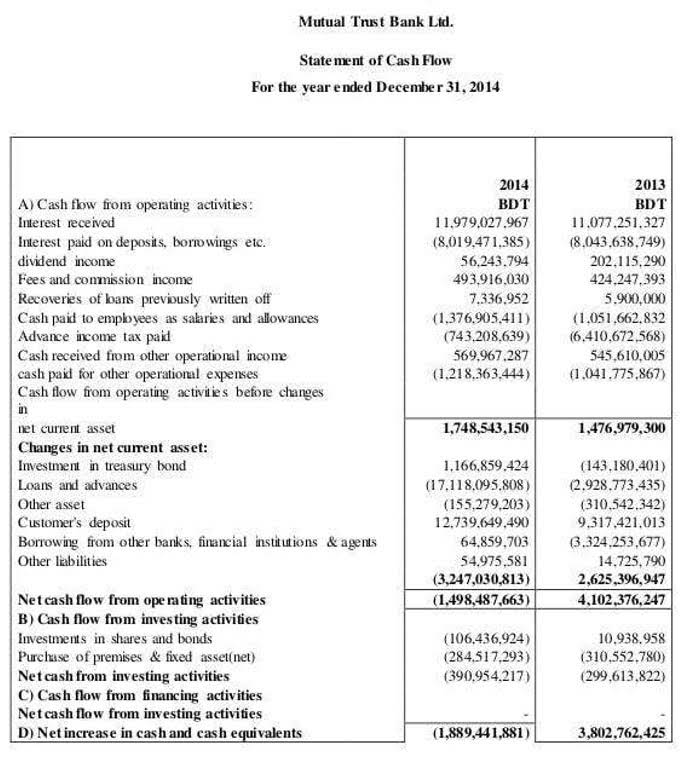
However, these entities are not businesses because they do not operate in a for-profit manner. Every business organization that has economic resources, such as money, machinery, and buildings, uses accounting information. Investors should be cautious when comparing the financial statements of companies from different countries as not all accounting principles are the same. All information deemed reasonably likely to impact investors’ decision-making should be reported in retained earnings detail in a company’s financial statements.
Cost Principle

Managerial accounting also encompasses many other facets of accounting, including budgeting, forecasting, and various financial analysis tools. Any information that may be useful to management falls under this umbrella. The Alliance for Responsible Professional Licensing (ARPL) was formed in August 2019 in response to a series of state deregulatory proposals making the requirements to become a CPA more lenient. The ARPL is a coalition of various advanced professional groups including engineers, accountants, and architects. This institute created many of the systems by which accountants practice today. The formation of the institute occurred in large part due to the Industrial Revolution.

Debt Security
Study of the behavior of basic economic units such as companies, industries, or households. BUSINESS COMBINATION that occurs when one entity directly acquires the ASSETS and LIABILITIES of one or more entities and no new corporation or entity is created. The goods on hand at any one time that are available for sale to customers in the regular course of business.
- Standard rate used to calculate the OVERHEAD cost of a given activity.
- The non technical term used by some to describe any cash or other property that is received in exchange of property that would be otherwise nontaxable.
- Cloud-based software allows real-time access to financial data, improving accuracy and collaboration.
- Period in a business cycle when economic activity picks up and the gross national product grows, leading into the expansion phase of the cycle.
- (1) For tax purposes, the concept of basis determines the proper amount of gain to report when an ASSET is sold.
Certified Public Accountant (CPA)
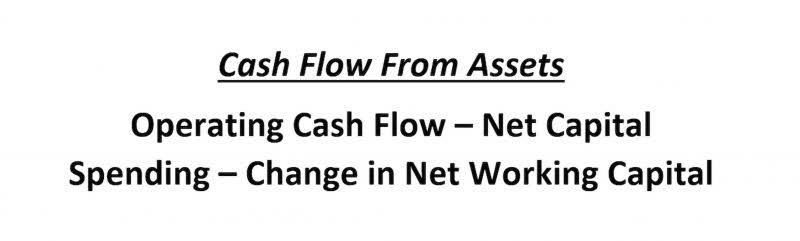
If you buy a building that will last for many years, you don’t write off the cost of that building all at once. Instead, you take depreciation deductions over the building’s estimated useful life. Thus, you’ve « matched » the expense, or cost, of the building with the benefits it produces, over the course of the years it will be in service. (1) Procedures performed by underwriters in connection with the issuance of a SECURITIES EXCHANGE COMMISSION (SEC) registration statement. These procedures involve questions concerning the company and its business, products, competitive position, recent financial and other developments and prospects. Also performed by others in connection with acquisitions and other transactions.
- IFRS is principles-based, while GAAP (despite the name) is rules-based.
- Method of bookkeeping by which REVENUES and EXPENDITURES are recorded when they are received and paid.
- A CORPORATION which, under the INTERNAL REVENUE CODE, is generally not subject to federal income taxes.
- For example, terms such as “accrual basis,” “depreciation,” or “liabilities” are not open to loose interpretation; each carries a specific meaning that influences how transactions are recorded and reported.
- A person who owns a BOND certificate issued by a government or CORPORATION.
- FINANCIAL STATEMENTS that report the operations of an entity for less than one year.
Raising the money by issuing shares of COMMON STOCK or PREFERRED STOCK. Total income taxes expressed as a percentage of NET INCOME before taxes. A way of AMORTIZING BOND DISCOUNTS or PREMIUMS by applying a constant interest rate to the CARRYING VALUE of the BONDS at the beginning of each interest period.
Unequal Cash Flows
Featuring a carefully selected array of accounting definitions, this page acts as a bridge to the complex language of accounting. Each term is thoughtfully linked to an in-depth explanation, streamlining your learning experience. From understanding what assets and liabilities entail to grasping the significance of a chart of accounts and much more, we cover the essential terrain to equip you with a robust understanding of accounting. The role of an accountant accounting define is to responsibly report and interpret financial records.

A multicolumn journal used to record sums of cash paid out for expenses. Net of cash receipts and cash disbursements relating to a particular Bookkeeping for Consultants activity during a specified accounting period. Any division of an organization authorized to operate, within prescribed or otherwise established limitations, under substantial control by its own management.
Assets, liabilities, and equity accounts are reported on the balance sheet, which utilizes financial accounting to report ownership of the company’s future economic benefits. These transactions are summarized in the preparation of financial statements—including the balance sheet, income statement, and cash flow statement—that record a company’s operating performance over a specified period. Accounting standards improve the reliability of financial statements.
